Extraterritorial Ecologies
An alternative reality for the Tijuana–San Diego divide. It is not a fixed solution but a reframing—an attempt to construct a weird scenario that allows us to defamiliarize the border, so we might approach and understand it in a new way.
The border/political divide as a world producing object, it acts as a vessel. It absorbs and processes geopolitical tensions between north and south america: capital, migration, nationalism, climate, data—and expels them in the form of strange realities.
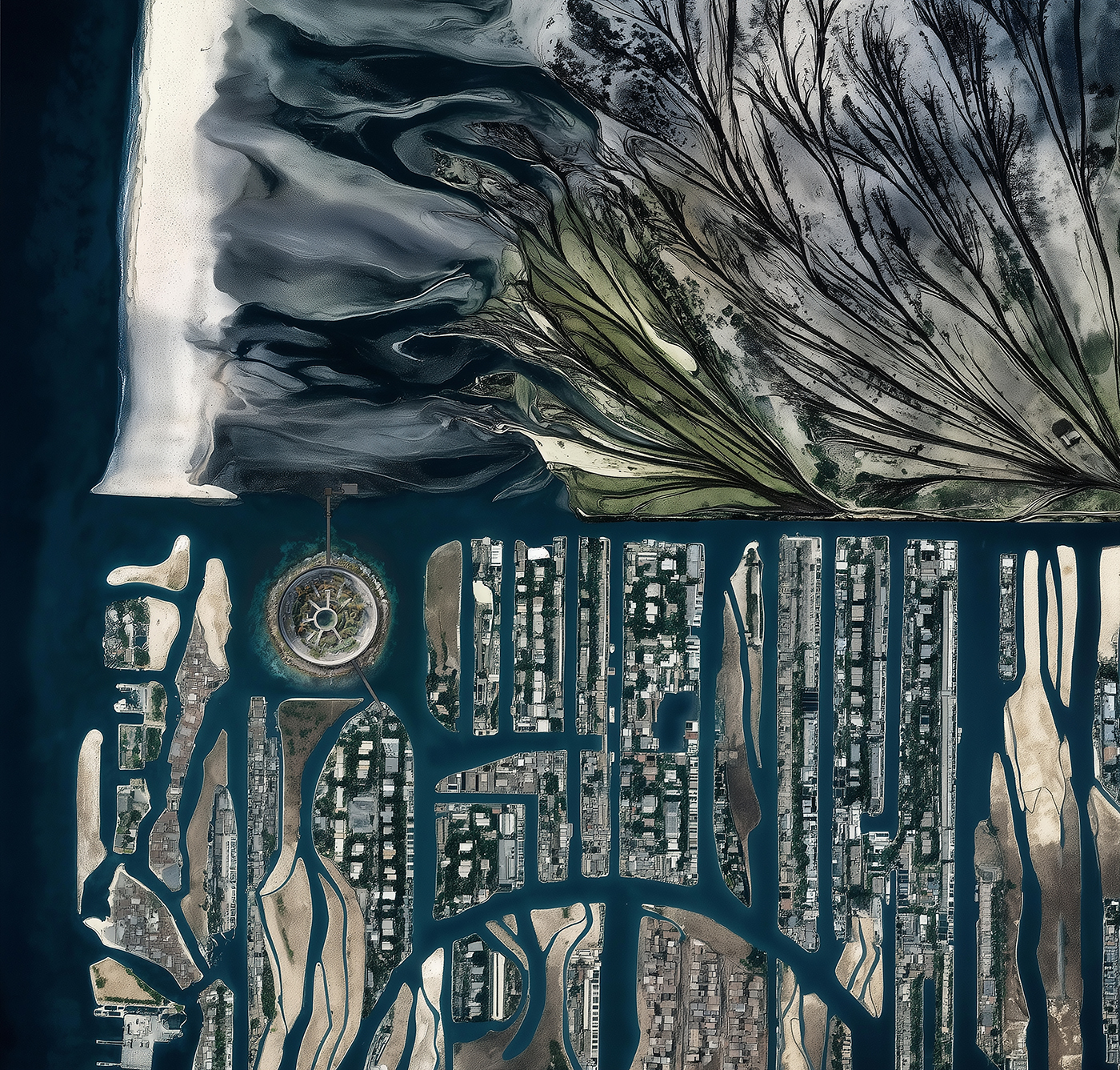
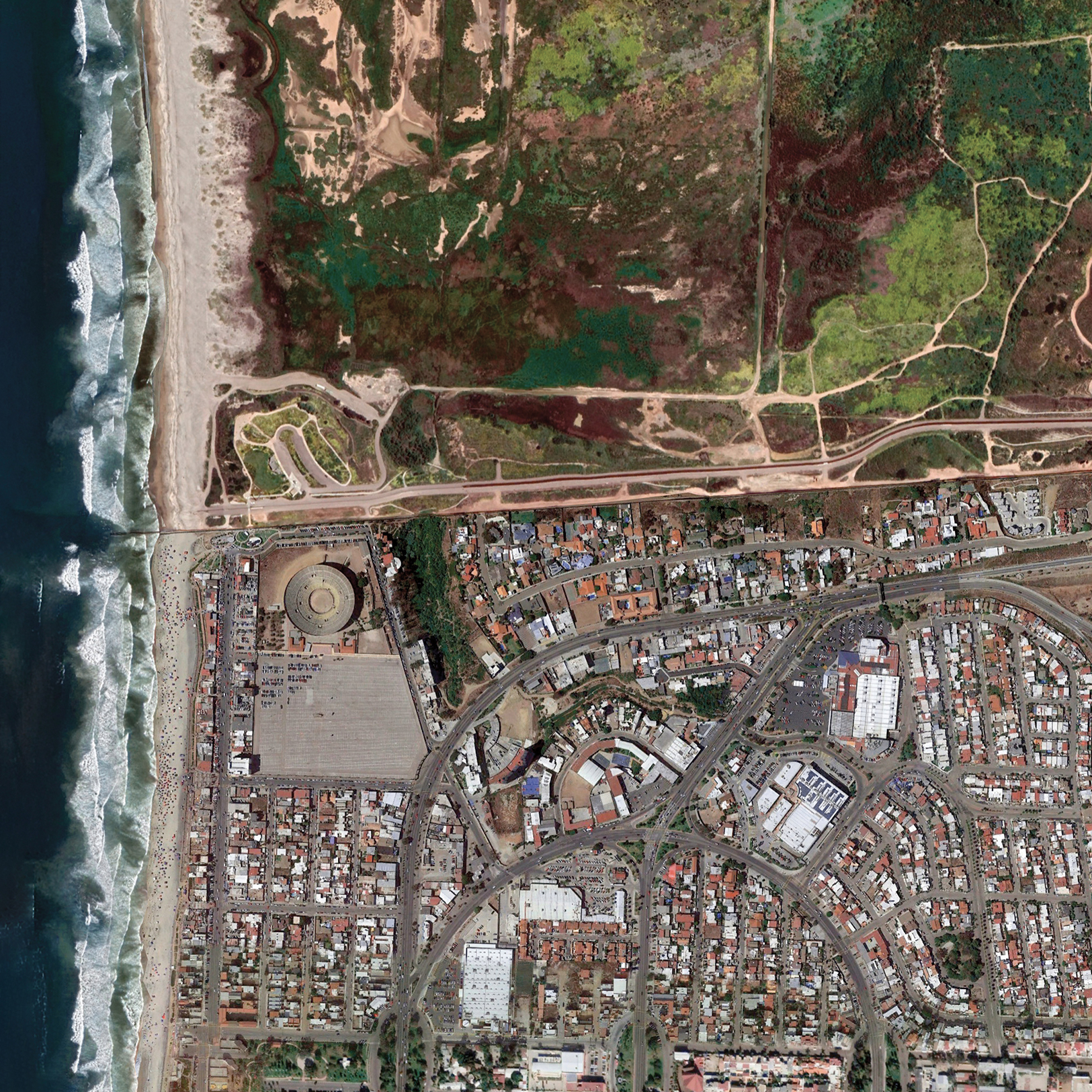
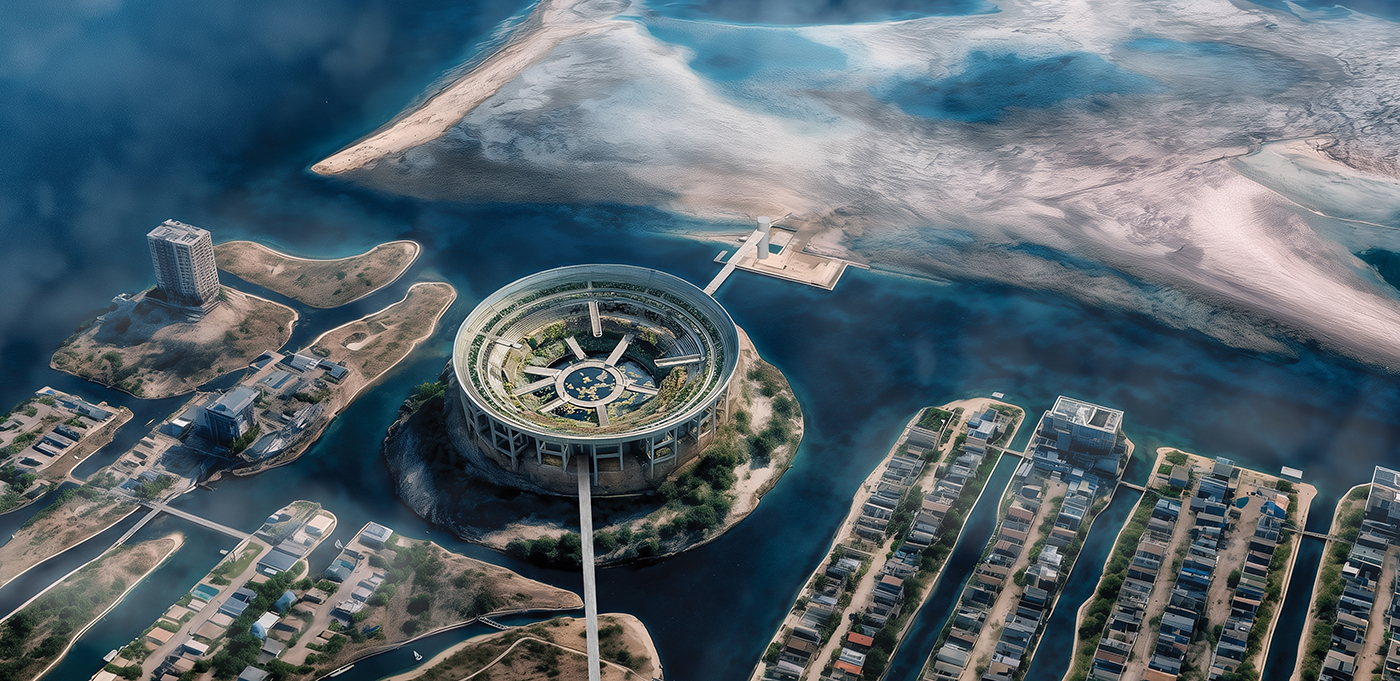
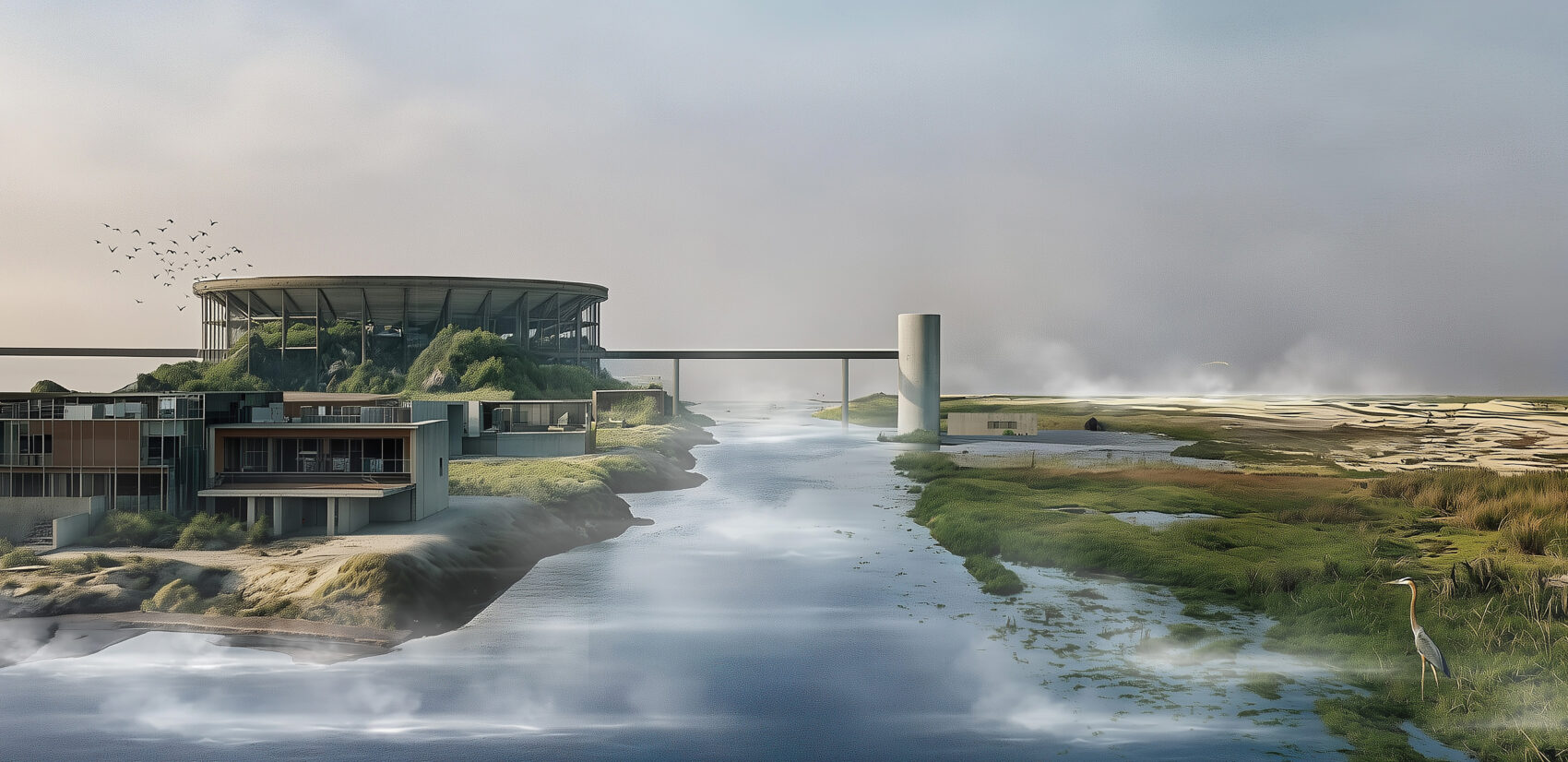
In this imagined version, a massive flooding, an anthropogenic calamity that knows no borders, reshapes the place where the Tijuana Estuary meets the Playas de Tijuana neighborhood. The border wall vanishes, replaced by a channel of water. The city’s rigid grid fractures into islands, creating a landscape where built form and water’s forces intertwine.
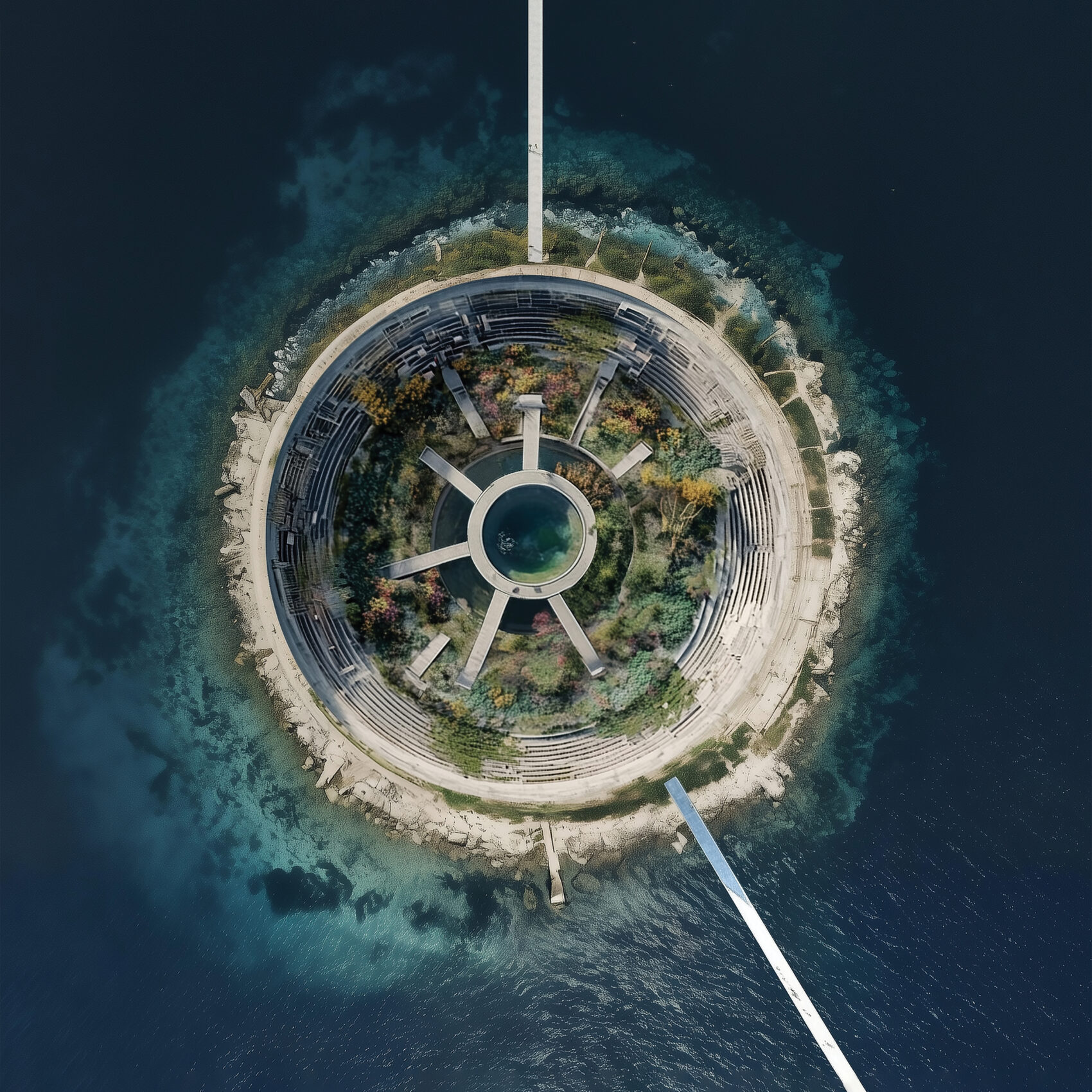
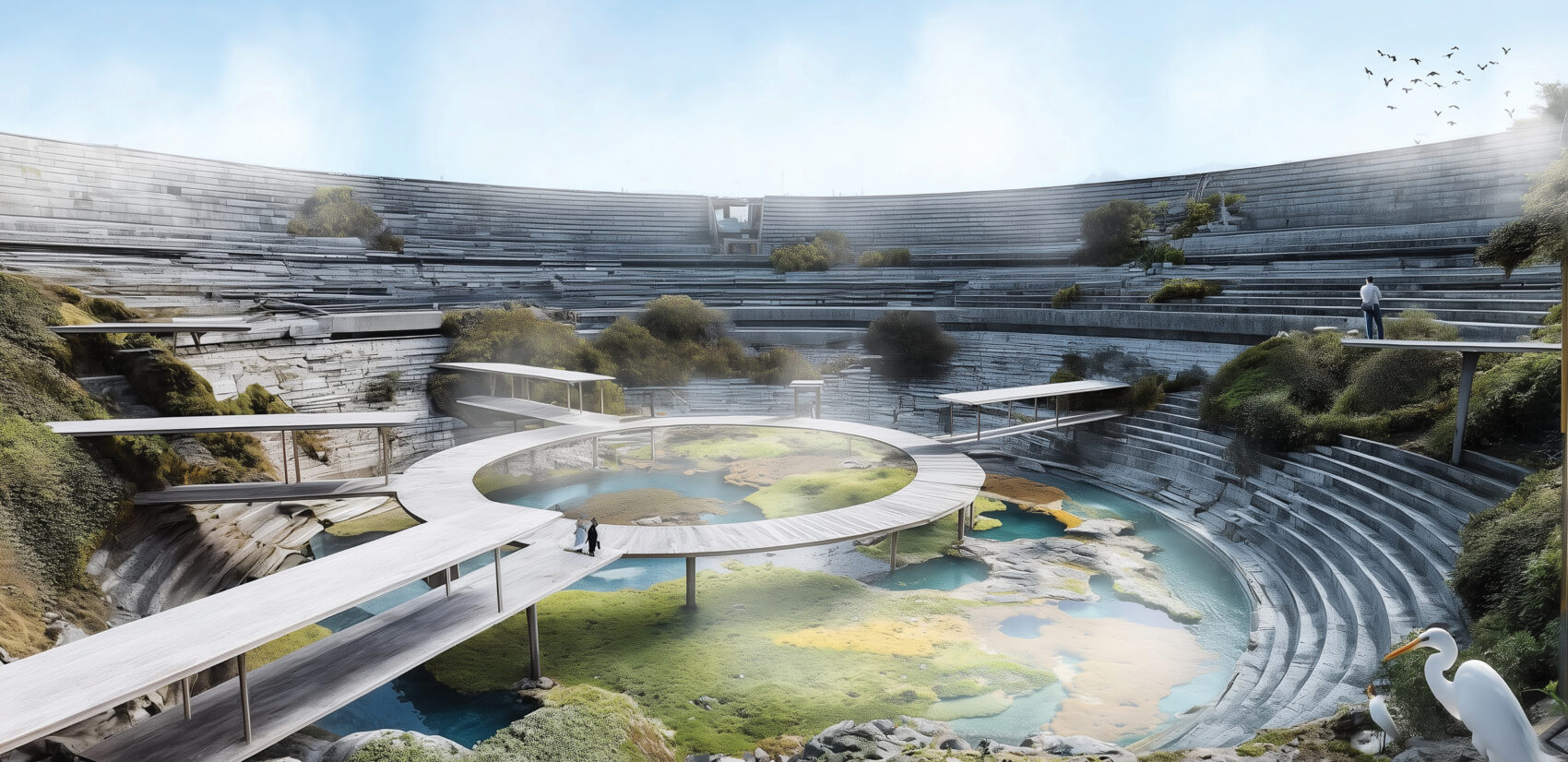
Within this landscape emerges the extraterritorial garden—a reimagining of Friendship Park, once a place where people met their relatives who could not cross into the U.S., speaking through the steel bars of the border wall. A tragic arrangement we have normalized—just as we have accepted the wall’s disruption of ecosystems, and so many other systemic conditions where the well-being of Earth’s inhabitants is treated as secondary. The garden itself was once a bullfighting arena, a theatre for human exceptionalism and violence. Through the slow work of nature in reclaiming this space, it has become a peaceful, enclosed microcosm: tidal pools, halophytes, and estuarial fauna intertwining with cracked concrete and weathered steel. Surrounded by water, it belongs to neither the U.S. nor Mexico, operating under an outside nation-state logic—an ecological and relational space where encounters occur without mediation, and intimate human presence replaces surveillance.
The extraterritorial garden is not an isolated intervention. It is inseparable from this speculative future and shaped by it. It is at once a result of the flood and a response to it—a fragment of a different way of inhabiting a post-border world.
- Año 2025
- Categoría Environment